
![]() |
![]() |
|||||
|
![]() | |||||||||||||||||||||||||||||
|
![]() | |||||||||||||||||||||||||||||
Killer whales are full of toxic chemicals, new study says PCBs make popular orcas prey to menacing diseases Monday, October 25, 1999 By M.L. LYKE
The tourist photographs and the scientific text tell different stories.
In the photos, magnificent black-and-white orcas leap from green waters
off the San Juan Islands, trailing sunlit diamonds. They are wild, rugged,
sleek, the very symbol of the unspoiled beauty of the Northwest.
"These killer whales can now be considered among the most contaminated
marine mammals in the world," said Dr. Peter Ross, research scientist with
the Institute of Ocean Sciences in Sidney, B.C., and lead author of a new
study titled "High PCB Concentrations in Free-Ranging Pacific Killer
Whales, Orcinus orca."
Whale researchers, puzzled by recent declines in orca populations,
describe the findings as troubling and scary.
"We have very toxic chemicals here. This should be a wake-up call,"
said Rich Osborne, science curator at the Whale Museum on San Juan Island.
"It may take orcas . . . dying for people to finally get it."
Researchers used a pneumatic dart with a stainless steel tip -- 6.4 mm
in diameter -- to sample 47 killer whales that swim the inland and coastal
waters around Washington and British Columbia. These include the
ocean-cruising transient whales that prey on seals and other marine
mammals and the southern and northern families of orcas that dine almost
exclusively on fish -- preferably the "king" of the salmon, the chinook.
All 47 orcas were known individuals, exhaustively documented through
observation and photo catalogs. Analysis of blubber samples revealed what
Ross terms "disturbingly" high concentrations of PCBs in all the groups.
Most contaminated were the high-seas transients and the celebrated
southern "J," "K" and "L" pods beloved by Washington whale-watchers.
With jaws dropped and cameras clicking, few of the orca lovers have a
clue that these celebrities of the cetacean world may be in danger.
PCBs do not cause outright death. But extensive laboratory animal
experiments and captive feeding studies of seals show contaminants can
weaken immune systems, hamper reproduction and cause skin disorders and
subtle changes in physiology.
Scientists have noted tumors, skeletal abnormalities, disease and
reproductive problems in the contaminated beluga whales on Canada's St.
Lawrence estuary, which drains the heavily industrialized Great Lakes. And
the Northwest killer whales, Ross said, are four to five times more
polluted than those belugas.
Animals with weakened immune systems may be especially vulnerable to
rampaging diseases. This raises the specter of extinction in a small
population like the southern orcas, whose numbers have dropped from 96 to
84 in three years.
"With the population so small, they could be wiped out by a virus,"
Osborne said.
The B.C. study, which will be published in the Marine Pollution
Bulletin, involved researchers from the Institute of Ocean Sciences, the
University of British Columbia, the Vancouver Aquarium and the Pacific
Biological Station in Nanaimo, B.C. It is one of the most comprehensive
toxicology studies on whale populations to date.
The study shows PCB levels in the fat of transient males averaged 251
parts per million. In southern pods, levels were 146 parts per million.
Humans average less than 1 part per million. "That means these animals
are about 400 to 500 times more contaminated than humans," Ross said.
The northern pods had only 46 parts per million -- two to three times
less than their southern counterparts.
"There's more pollution down here. If you look at the sediment cores,
there are higher concentrations of PCBs and DDTs than up north," said
Osborne, who is drafting a petition to list orcas as a threatened or
endangered species in the United States.
One researcher calls the orca waters south of the border a "toxic
soup."
Ross suspects the open ocean may be another source of PCBs. Like
humans, animals are what they eat, and orcas eat salmon that grow up in
the open seas, where contaminants may collect from distant industrial
sources in Asia.
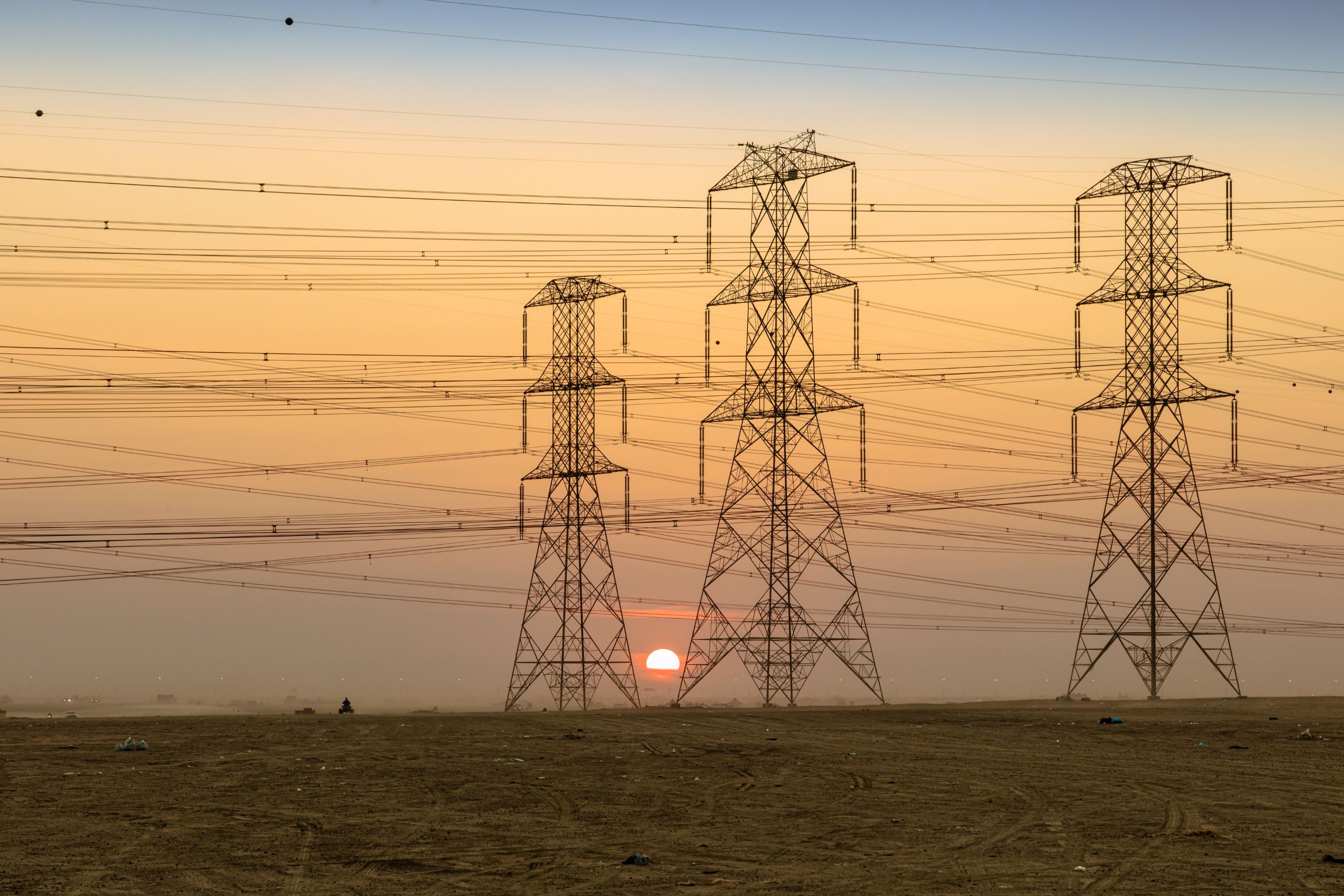
PCBs -- polychlorinated biphenyls -- are a long-lived industrial
compound used to insulate electric transformers and capacitors. They were
banned in the United States and Canada in the mid-1970s but are still
widely used in the Third World. Slow to degrade, PCBs float in the air and
water, permeate soil and accumulate in animal fat.
The higher an animal is on the food chain, and the longer-lived, the
greater the concentration of toxins. Orcas -- which are technically
mammoth dolphins with an age span of 40-90 years -- are considered top
predators in the ocean. They consume mass quantities of polluted prey.
Those toxins, however, are only one of the modern-day stresses
affecting Northwest orcas, which may have navigated these waters for as
long as 10,000 years.
The Canadian government listed orcas as a threatened species in April,
citing three major concerns.
One was a diminished salmon supply. Fish are becoming both scarcer and
smaller.
Another was heavy boat traffic. This summer the average number of boats
following a group of southern whales at any given time was 21. Some San
Juan Islanders complain they can no longer see the orcas for all the
boats.
Third was contamination. "If you have a lot of boat traffic, diminished
salmon returns and high levels of PCBs in animals, it doesn't take a
rocket scientist to figure out this represents a tangible risk to this
population," Ross said.
Whether PCB contamination is linked to population decreases in southern
pods is a difficult question. Death is a normal part of life, Ross notes.
"It's not unexpected to find a 20 to 45 percent mortality in the first
year of life in marine mammals."
And the decrease in the orca population could reverse itself.
"We're still very hopeful that this population is going to make it,"
Osborne said. "But it will be 10 to 20 years before we know."
Yet, researchers describe the recent declines as the longest and
steadiest since the 1970s, when scores of orcas were hunted and captured
and sold to marine parks. Females in the 84-member southern pod are
producing fewer calves, and some offspring are not surviving.
One mother recently died with a damaged uterus and a placenta half in
and half out of her body. The calf she left behind made headlines as it
struggled to survive. The calf was not spotted at the last sighting of J,
K and L pods, which disappear from local waters in the fall.
There is no question that females pass PCBs on to calves through their
high-fat milk.
The B.C. study, which analyzed data by sex, age and dietary preference,
found that contaminant levels actually decreased in reproductively active
females, then increased again at the approximate age of 50.
The reason: Nursing moms pass PCBs to offspring.
"Those calves are bathed in PCB-laden milk at a time when their organ
systems are developing and they are at their most sensitive," Ross said.
Ross also did toxicology studies on some of the 100-plus gray whales
that washed up dead along the West Coast this spring. Ironically, those
whales, which feed primarily on small bottom-dwelling ocean animals,
showed very low levels of contamination. But their blubber was seriously
depleted, leading scientists to conclude they died of starvation.
The death of the grays could be natural attrition. Or it could be
linked to increases in the temperature of northern ocean waters, where
grays migrate to feed. Increased temperatures there have been linked to
diminished food supplies for a number of animals, including seals, sea
birds and whales.
Both the grays and the orcas, Ross said, may be telling us something
about the state of the ocean. They may be to the ocean what the canary is
to the coal mine.
"Marine mammals are wonderful creatures, and very good quality
indicators of the health of an ecosystem," Ross said. "What they're
telling us is that the ocean may be under significant climate stress, and
that it is much more contaminated than previously thought."
|
||||||||||||||||||||||||||||||
|
Send comments to newmedia@seattle-pi.com | |